How to write good SEO title?
Published: November 26, 2025
In digital marketing, the SEO title (title tag) is one of the key elements of search engine optimization. It’s a short description of a page that appears as the clickable headline in search results and in the browser tab. A well-crafted SEO title helps search engines and users immediately understand the page’s content.
In other words, the SEO title is often the first thing a user notices on Google, so it must be both compelling and relevant. In the following sections, we will explain what exactly an SEO title is, why it’s important, how to write it properly, which tools you can use for choosing keywords, common mistakes to avoid, and how to balance the needs of users and search engines when optimizing titles.
What is an SEO Title?
An SEO title is the page title defined in the HTML code using the <title> tag, and it serves as a meta element of the page. This title is not displayed within the page content itself to users, but appears in search engine results (usually as the blue clickable text) and at the top of the browser as the tab label.
In other words, the SEO title is a meta title of the page that tells search engines what the page is about and gives users a first impression of the content. It’s important to note that the SEO title (title tag) is not the same as the visible on-page article title (usually the H1 heading) – although they can be similar, the title tag is primarily intended for search engines and for display in search results.
Why is the SEO title important?
The SEO title plays a significant role for both search engine optimization and user experience. First of all, search engines use the title to understand the topic and relevance of the page to a search query. A well-optimized title can contribute to higher rankings for specific keywords. Even more importantly, the SEO title directly affects the click-through rate (CTR) – a compelling title will encourage more users to click on your result among the others.
If the title is unclear or uninteresting, users will likely skip over your page. Additionally, a quality title that accurately represents the page’s content ensures that when a user does click through, they get what they expect, which improves user satisfaction and lowers bounce rate.
How to Structure an SEO Title Properly
Writing an effective SEO title requires a mix of creativity and adherence to proven SEO guidelines. Below are the most important tips on how to structure a page title:
- Include the main keyword: The title should contain the primary search term (keyword) relevant to the page content. Ideally, place this keyword as close to the beginning of the title as possible, since both search engines and users pay the most attention to the first words.
- Keep it an optimal length: Titles that are too long will be cut off in search results. It’s recommended to keep the title under about 60 characters (or roughly 600 pixels in width) to avoid the text getting truncated. Conversely, a title shorter than about 30 characters might be too uninformative, so aim for a concise but clear title around 50–60 characters.
- Make it unique: Every page should have its own unique title. Avoid duplicating the same SEO title on multiple pages – this can confuse search engines and dilute relevance. A unique title also helps users distinguish between your pages.
- Accurately describe the page content: A good title clearly communicates what the page is about. From the title, a visitor should get an accurate idea of what to expect on the page. Avoid vague or generic titles like “Home” or “Welcome” that don’t provide any information.
- Use separators and proper casing: If you want to include multiple elements in the title (e.g., a topic and your brand name), use characters like a vertical bar
|or an en dash–as separators. For example: “Travel Guide | AgencyName”. The vertical bar typically takes up slightly less space than a dash, and both help improve readability. Also, it’s common in English to Capitalize Each Major Word in titles (Title Case), while in Croatian you would write it as a normal sentence (except for proper nouns). - Consider adding your brand: If your company or brand name is recognizable, you can add it at the end of the SEO title (e.g., “… | BrandName”). This can increase brand awareness, but be careful that it doesn’t make the title too long. The brand usually comes last so that the keywords remain prominent at the start.
Tools for Keyword Research
Choosing the right keywords is extremely important for writing a good SEO title. Before you craft a title, research which terms your target audience is actually searching for. Fortunately, there are numerous tools that can help you with this:
- Google Keyword Planner: A free tool that provides insight into the monthly search volume of specific terms and suggests related keywords. It’s an excellent starting point for discovering popular phrases related to your topic.
- Google Trends: A tool that shows the popularity of certain searches over time and lets you compare multiple terms. Using Google Trends, you can spot seasonality in tourism (e.g. a rise in searches before the summer season) and choose a title phrasing that is trending.
- Google autosuggest (predictive search): A simple yet effective method – start typing a keyword into Google search and pay attention to the autocomplete suggestions. These suggestions reveal what users are most frequently searching for and can give you ideas to craft a title that matches those queries.
- Specialized SEO tools (Ahrefs, SEMrush, Moz): Professional SEO platforms provide advanced options for keyword research, including data on keyword difficulty (competition), similar terms, and the titles your competitors use. By using these tools, you can find profitable niche keywords and optimize your title to target those terms.
- Content idea tools (AnswerThePublic, Ubersuggest): These tools generate frequently asked questions and popular phrases related to a given topic. Using them can help you discover specific ideas of what your audience wants to know, so you can frame your title as an answer to such a question or problem.
Common Mistakes When Writing SEO Titles
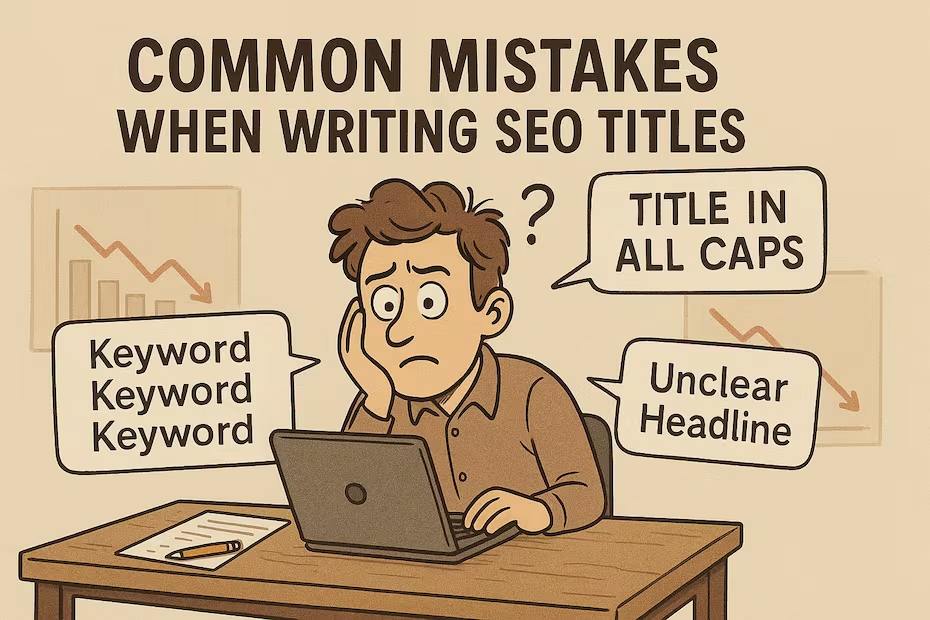
Even experienced writers can make mistakes when optimizing titles. Below are some of the most common errors you should avoid:
- Titles that are too long or too short: A title that’s too long will be cut off on the results page, meaning your message won’t be fully visible to users. On the other hand, a title that’s too short might not convey enough information about the content. Always check the title length and try to stay within the recommended range (around 50–60 characters).
- Keyword stuffing: Repeating the same keyword multiple times or listing a bunch of related terms in the title creates a poor user experience and can negatively impact rankings. A title like “Hotel Zagreb – cheap hotel Zagreb affordable accommodation Zagreb” looks unprofessional. Instead, use one primary keyword and possibly one or two natural variations that together form a meaningful title.
- Omitting the keyword: The opposite mistake of overstuffing is not including the important term at all. A title that doesn’t contain the keyword for which the content is relevant misses the opportunity to signal to the search engine what the page is about. An example of a bad title would be just “News Blog” for an article of travel tips – such a title doesn’t target any search query.
- Generic or uninformative titles: Titles like “Welcome” or “Homepage” tell the user nothing and don’t make your page stand out in search results. Definitely avoid generic words with no specificity. Your title should be concrete and meaningful.
- Titles that don’t match the content: Clickbait-style titles that promise one thing but the content doesn’t deliver will disappoint users. Not only will you lose the audience’s trust, but search engines might reduce your visibility if they detect that the title and content don’t match. Always ensure the title faithfully represents what is on the page.
How to Optimize a Title for Users and Search Engines

The best SEO titles are those that successfully combine user needs with search engine requirements. This means the title should contain relevant keywords (so that the search engine can easily understand the content), but at the same time it should be written in an appealing way that is useful to the user. Here are some guidelines on how to achieve that balance:
First, always keep in mind the user’s intent. Ask yourself what the user is actually looking for when they type a certain query. The title should address that intent. For example, if someone searches for “travel tips”, a good title would clearly imply that the page offers such advice (e.g. “Practical Tips for Stress-Free Travel”). Understanding the search intent will help you formulate a title that meets the user’s expectations.
Second, write clearly and compellingly, as if you’re writing for a real person (because you are). Avoid dry, robotically composed titles. Every SEO title is essentially an advertisement for your content and should clearly and accurately summarize what the user can expect on the page.
Try to highlight a user benefit or solve a problem within the title. For example, instead of a generic “Hotel in city center”, a title like “City-Center Zagreb Hotel with Free Parking” emphasizes a specific benefit that might attract users.
Of course, in doing so you must not neglect the SEO elements: include the keyword you want to rank for, but in a way that sounds natural. A keyword phrase embedded in meaningful context is far more effective than a random list of terms.
Also, be careful not to exceed the recommended title length so that the entire title is visible in the results. It’s a good idea to test how your title will look in the SERP – there are online tools that simulate the Google results display and show if the title would be cut off.
Examples of SEO Titles for the Tourism Industry
To illustrate the theory in practice, below are examples of well-crafted SEO titles for the tourism niche. Each example is given first in Croatian, followed by its English version:
- 10 najboljih turističkih atrakcija u Dubrovniku koje morate posjetiti
10 Best Tourist Attractions in Dubrovnik You Must Visit - Vodič za putovanje u Pariz: savjeti, atrakcije i skriveni dragulji
Travel Guide to Paris: Tips, Attractions, and Hidden Gems - Najbolje destinacije za obiteljsko ljetovanje na Jadranu 2025
Best Family Destinations on the Adriatic for Summer 2025
In these titles, we can see the application of the tips mentioned in this article. They contain relevant keywords (e.g. tourist attractions Dubrovnik, travel guide Paris, family summer vacation Adriatic 2025), they are attractive to users (using numbers, specific topics, and timely terms), and they are sufficiently specific to clearly describe the content that follows.
Zaključak
Writing a good SEO title requires an understanding of both search engines and human psychology. In this blog post, we have covered the key aspects: from the definition of an SEO title and its importance, to structure and keyword selection, and the common mistakes to avoid.
In summary, the goal is to create a title that clearly signals the relevance of your content to search engines while also enticing users to click on your result over a competitor’s. An SEO title that is both optimized and appealing gives you a significant advantage in the battle for attention on the search results page.
Now that you understand the principles of writing effective SEO titles, it’s time to apply that knowledge to your own websites. Research your keywords, think about what your audience is looking for, and start crafting titles that make an excellent first impression.
Remember that practice is key – test different approaches and learn from the results. A good SEO title can increase your page’s visibility, bring in more visitors, and improve the overall success of your digital strategy, so give it the attention it deserves.
New web is waiting for you
Request a free quote and together we will find the best solution for your business.